A fundamental entry point into physical computing. Students master the basics of output control and digital logic using Arduino, bridging the gap between abstract code and physical reaction.
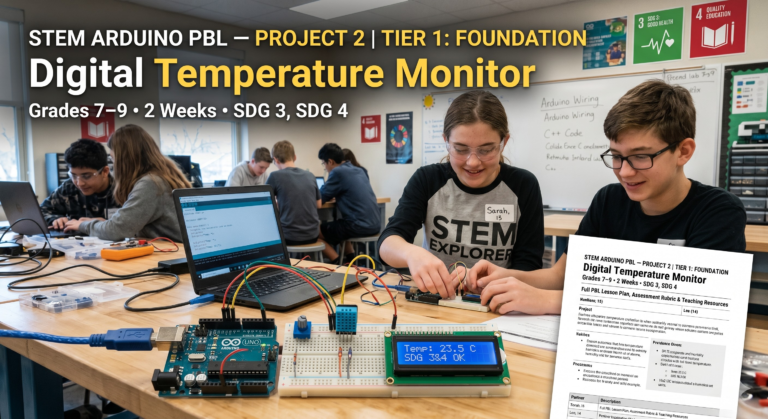
Students will act as environmental engineers to design and build a functional digital temperature monitoring system using an Arduino microcontroller. They will learn to interface a temperature sensor, program the Arduino to interpret analog/digital data, and display the results on a digital screen (LCD). The project culminates in students analyzing how accurate environmental monitoring contributes to healthier living and working spaces (linking to SDG 3).
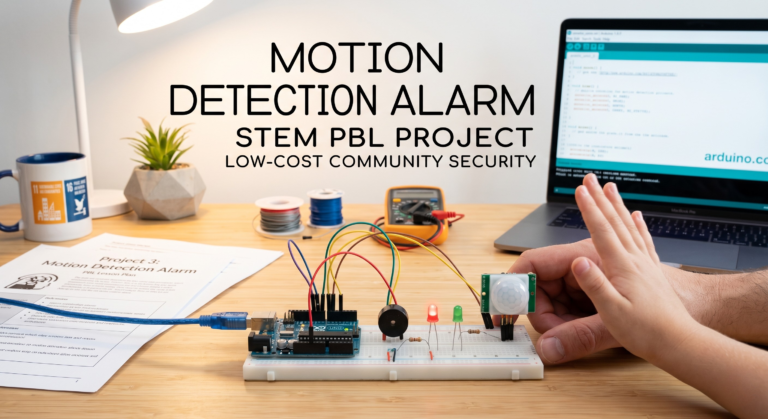
Students will act as community-centered designers to build a functional, low-cost motion-detection alarm using an Arduino microcontroller. They will learn to interface a PIR (Passive Infrared) motion sensor, program the Arduino to interpret digital input using Boolean logic, and manage complex system states—including arming delays and triggered alerts—using non-blocking timing. The project culminates in students analyzing how affordable DIY security technology can address safety inequities in underserved communities and exploring the ethics of surveillance (linking to SDG 11 and SDG 16).
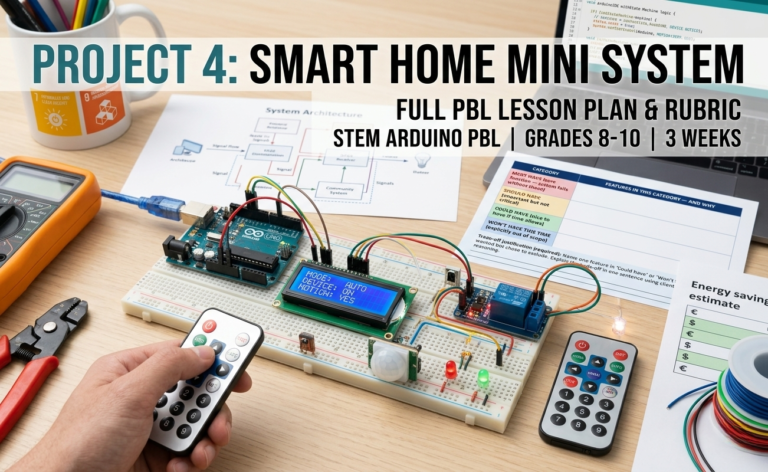
Students will act as systems engineers to design and build an integrated home automation system using an Arduino microcontroller. They will learn to interface multiple subsystems—including an IR remote, PIR motion sensor, and relay module—program the Arduino to handle complex multi-input logic and mode switching, and display real-time status updates on an LCD screen. The project culminates in students analyzing how integrated systems improve energy efficiency and conducting a quantitative energy-savings report for a real household (linking to SDG 7 and SDG 9).