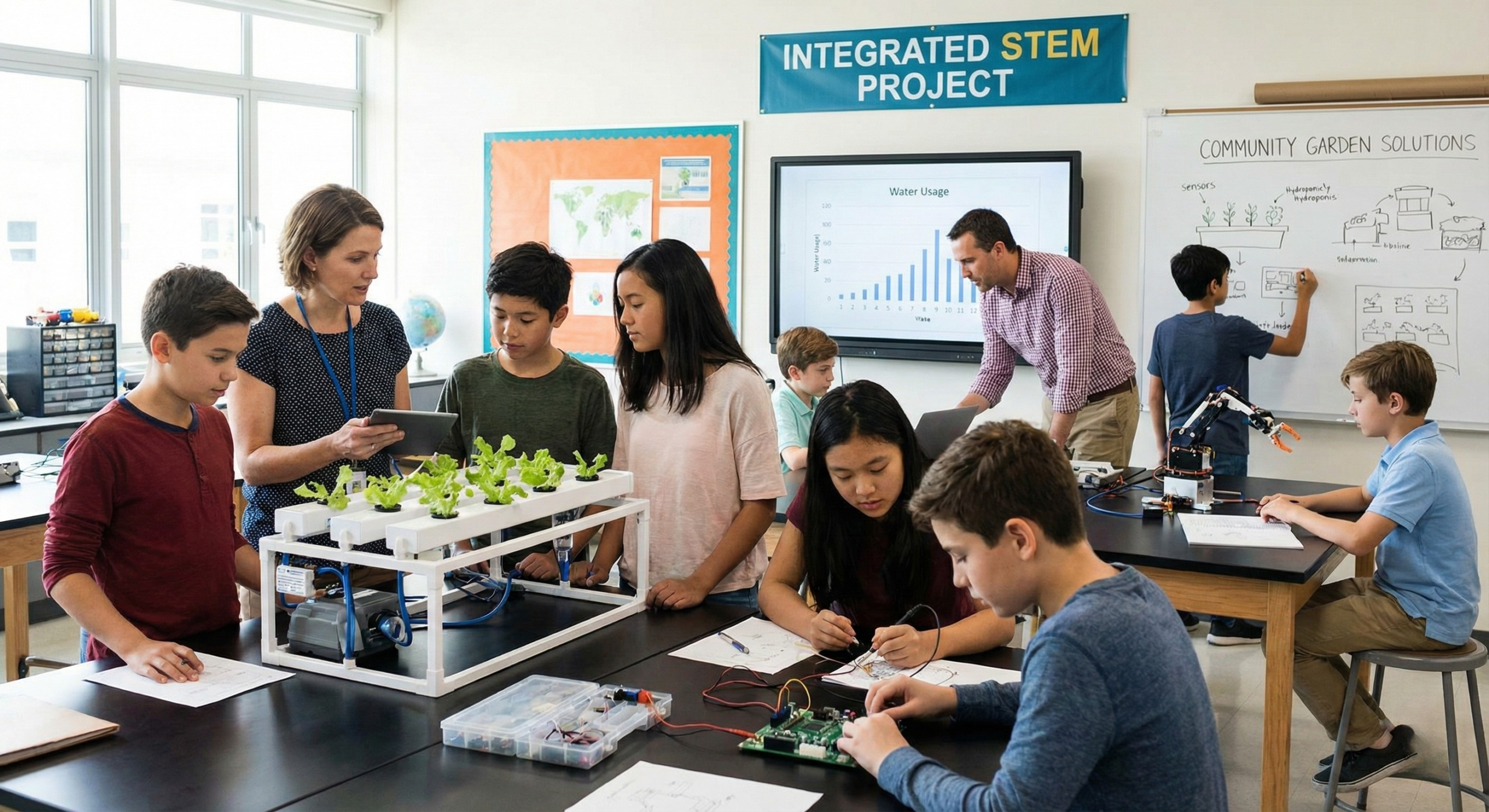




As we move into 2026, education is entering a period of accelerated change. Technological breakthroughs, shifting workforce demands, and deeper insights into how the brain learns are redefining what effective education looks like.
For teachers, administrators, and learners alike, this moment is pivotal. Traditional models are no longer disappearing, but they are being reworked, supplemented, and challenged by more flexible, personalized, and skills-driven approaches.
Below are ten defining trends shaping education in 2026, and why they matter.
1. The AI Revolution and the Rise of Prompt Engineering
Artificial Intelligence (AI) remains the most transformative force in education, with interest increasing more than 20× over the past five years. In 2026, AI is no longer a novelty; it is becoming a co-pilot for educators, supporting lesson planning, assessment design, differentiation, and accessibility for learners with disabilities.
A critical emerging skill is prompt engineering: the ability to ask precise, iterative questions to generate meaningful AI outputs. Research shows that when educators refine prompts thoughtfully, AI can produce highly customized and effective instructional materials.
However, challenges persist, including academic integrity, data privacy, and the risk of AI-generated misinformation, making ethical and informed use essential.
2. Online and Hybrid Learning Becomes the Norm
Hybrid learning is no longer a contingency plan; it is now a standard feature of modern education. Student satisfaction remains high, with 93–94% of learners reporting positive online learning experiences.
By 2026, more than half of higher education institutions plan to expand hybrid models, driven by student demand for flexibility and access to global expertise across time zones.
3. Alternatives to Traditional College Pathways
The four-year degree is no longer the only respected route to success. Demand is rising for affordable, job-aligned pathways such as Career and Technical Education (CTE), certificate programs, and stackable credentials.
Evidence shows that CTE participation can increase high school graduation rates by up to 10%, while providing clearer, faster transitions into the workforce.
4. Addressing the Teacher Shortage Crisis
Education faces a growing recruitment and retention challenge. Studies suggest that 54% of teachers are considering leaving the profession within the next two years, with shortages especially severe in science, mathematics, and special education.
In response, institutions are experimenting with apprenticeship models, alternative certification routes, and flexible entry pathways to attract skilled professionals who may have been previously excluded.
5. The Growing Importance of Soft Skills
As AI automates technical tasks, human skills are becoming increasingly valuable. According to HR surveys, 92% of employers rate soft skills, communication, collaboration, adaptability, and problem-solving as equally or more important than technical expertise.
Schools are responding by embedding social-emotional learning (SEL) into curricula. Research shows that strong SEL programs not only improve well-being but also boost academic performance in subjects like mathematics and reading.
6. Microlearning and Spaced Repetition
To address cognitive overload and shifting attention patterns, educators are embracing microlearning; short, focused learning segments supported by spaced repetition.
This approach aligns with cognitive science research and can increase long-term retention by up to 80% compared to traditional mass instruction.
7. Immersive Learning through Extended Reality (XR)
Extended Reality (XR), including virtual and augmented reality, is moving into mainstream education. From virtual field trips to simulated medical dissections, XR enables experiential learning that would otherwise be inaccessible.
Notably, 92% of institutions report higher student engagement when XR tools are used meaningfully.
8. Advanced Data Analytics for Student Support
Data in education is shifting from descriptive to actionable. Beyond grades, institutions now use predictive analytics to identify students who may need early intervention and to optimize resource allocation.
When applied ethically, data analytics can support, not replace, professional judgment.
9. Gamification as a Driver of Engagement
Gamification has evolved beyond simple rewards into sophisticated design systems that encourage collaboration, persistence, and critical thinking.
Surveys show that 83% of learners feel more motivated in gamified learning environments, compared to 61% reporting boredom in traditional formats.
10. Moving Beyond High-Stakes Standardized Testing
Trust in standardized testing continues to decline, with critics citing bias and limited representation of real learning. Institutions such as Harvard have extended test-optional policies through 2026.
In response, alternatives like Mastery Transcripts are emerging, showcasing evolving portfolios of student work and higher-order skills rather than single exam scores.
Key Takeaways for 2026
-
AI as a Partner: Educators are becoming informed users and designers of AI-supported learning, not passive adopters.
-
Flexibility Matters: Hybrid models, microlearning, and alternative credentials reflect how learners live and work today.
-
Human Skills Remain Central: Teacher wellbeing, soft skills, and ethical judgment remain the foundation of effective education.
A Simple Analogy
Education in 2026 is like a GPS system for learning.
In the past, education resembled a paper map: static, linear, and identical for everyone. Today, AI and data analytics allow learning pathways to adapt in real time, offering alternative routes (such as CTE), personalized pacing, and turn-by-turn guidance through microlearning.
The destination may be shared, but the path is no longer one-size-fits-all.